










































Solar Street Light Buying Guide: Wattage, Battery, Pole Height and Sizing for Projects
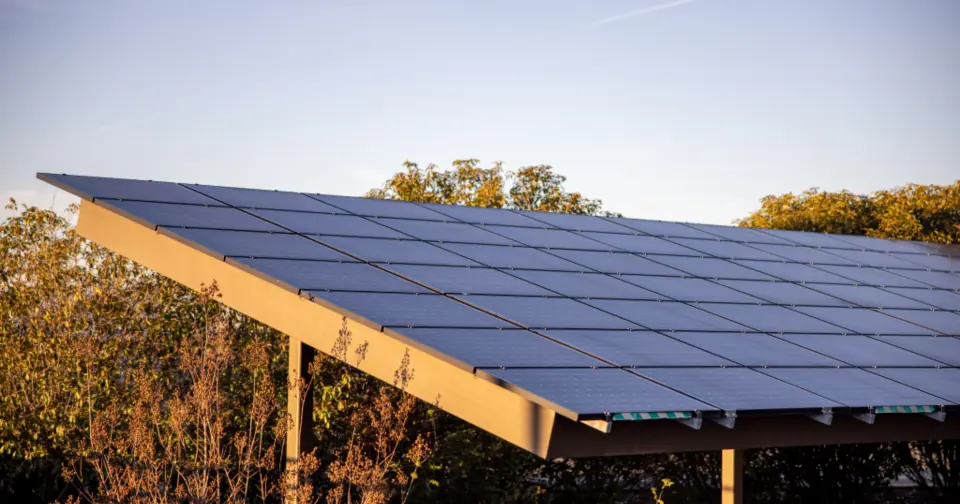
How to specify and buy solar street lights: the parts that matter, worked battery and panel sizing, pole height and spacing, ratings, and questions to ask manufacturers.
To choose a solar street light, start with how much light the road needs and how many hours it must run, then size the LED, battery and solar panel to match your location's sunlight. Check the battery type, charge controller, protection ratings and warranty, and ask the manufacturer for test data instead of relying on the advertised wattage.
How does a solar street light work?
A solar panel charges a battery during the day. At dusk a controller switches the LED luminaire on using the stored energy, often dimming it late at night or when no movement is detected. No grid cable is required, which helps on remote roads, compounds, car parks and rural projects.
All-in-one or split system: which should you choose?
| Type | Description | Advantages | Limits |
|---|---|---|---|
| All-in-one | Panel, battery, controller and LED in one unit | Fast installation, compact | Limited panel angle and size; battery sits near heat |
| All-in-two | Panel separate from lamp and battery unit | Panel can face the sun better | More wiring |
| Split system | Separate panel, battery box, controller and lamp | Larger capacity, easier replacement | Higher installation effort |
Small paths and compounds often suit all-in-one units. Main roads and long running hours usually need larger split or two-part systems.
How many lumens do you need?
Brightness on the ground, measured in lux, matters more than the wattage on the box. It depends on luminous output, lens design, mounting height and spacing. Your project may have a required road lighting standard; ask a lighting designer and request a photometric (IES) file from the supplier. Compare luminaires by delivered lumens and efficacy in lumens per watt.
How do you size the battery?
Use this method:
Battery capacity (Wh) = LED power (W) × equivalent full-power hours per night × backup nights ÷ usable depth of discharge ÷ system efficiency
Worked illustration: a 40 W light, dimming so that it uses the equivalent of 8 full-power hours, needs 320 Wh per night. For 2 backup nights that is 640 Wh. With 80% usable depth of discharge and 90% efficiency: 640 ÷ 0.8 ÷ 0.9 ≈ 890 Wh. Ask the supplier to show the battery's rated capacity in watt-hours, not only ampere-hours without voltage.
How do you size the solar panel?
Panel power (W) = daily energy (Wh) ÷ peak sun hours ÷ charging efficiency
Worked illustration: 320 Wh per night, 4.5 peak sun hours in the design month and 75% overall charging efficiency gives 320 ÷ 4.5 ÷ 0.75 ≈ 95 W. Use the lowest-sun month for your site, and allow extra for dust, shade, heat and ageing. These figures are examples; have an engineer confirm your design.
Which battery type is best?
| Battery | Typical characteristics |
|---|---|
| LiFePO4 (lithium iron phosphate) | Long cycle life, good thermal stability; widely preferred |
| Other lithium-ion | Compact and light; check cycle life and heat behaviour |
| Gel or AGM lead-acid | Lower initial cost, heavy, shorter life in deep daily cycling |
Ask for the cell manufacturer, rated cycles at a stated depth of discharge and a battery management system for lithium packs.
What is an MPPT charge controller?
A charge controller protects the battery and manages the load. MPPT (maximum power point tracking) controllers generally harvest more energy than basic PWM controllers, particularly when panel voltage and battery voltage differ or light conditions vary. Also check dimming profiles, motion sensing, over-charge, over-discharge and short-circuit protection.
What IP and IK ratings should you ask for?
| Rating | Meaning | Guidance |
|---|---|---|
| IP65 | Dust tight, protected against water jets | Common minimum outdoors |
| IP66 | Dust tight, protected against powerful water jets | Exposed or stormy sites |
| IP67 | Dust tight, protected against temporary immersion | Where flooding of the part is possible |
| IK08 or higher | Mechanical impact resistance | Public areas with vandalism risk |
Ask for the test report, not only the label.
How high should the pole be and how far apart?
Mounting height and spacing depend on road width, optics and required lux. As a rough first estimate many designs space poles around three to four times the mounting height, then adjust using a photometric calculation. Poles must also resist local wind loads with the panel attached, so give the supplier your wind conditions and get foundation details.
What should you ask a solar street light manufacturer?
- Datasheet with LED power, delivered lumens, colour temperature and efficacy
- Battery chemistry, watt-hours, cycle life and replacement procedure
- Panel type, power and warranty
- Controller features and dimming profile
- IP and IK test reports and photometric file
- Warranty period, what it covers and spare-part availability
- References from similar installations
- Sample unit for night testing before bulk order
Then verify the supplier before paying and write the values into your RFQ.
How do you maintain solar street lights?
- Clean panels regularly, more often in dusty areas
- Trim trees that cast shade
- Inspect mounting bolts, seals and wiring
- Record failures and battery run time
- Plan battery replacement over the project life
How do you collect the information needed for a quotation?
A manufacturer can only size a system correctly when it knows your site. Prepare these details before you ask for prices.
| Information | Example | Why it matters |
|---|---|---|
| Location | City and coordinates | Determines sunlight and temperature |
| Road or area | 7 m road, one side lighting | Determines optics and spacing |
| Required light level | Average lux and uniformity | Determines luminaire output |
| Operating profile | Full power 5 hours, dimmed until dawn | Determines battery size |
| Backup | 2 to 3 cloudy nights | Determines reserve capacity |
| Wind and environment | Coastal, dusty, flood-prone | Determines pole strength, coating and rating |
| Quantity and schedule | 120 sets in two deliveries | Determines price and lead time |
How does temperature affect performance?
High temperatures reduce solar panel output and shorten battery life, and very low temperatures limit charging for many lithium batteries. In hot climates ask where the battery is mounted, how it is ventilated or shaded, and what charging temperature range the manufacturer guarantees.
How should you test a sample light?
- Charge fully, then run the programmed profile for several nights.
- Record switch-on time, run time and dimming behaviour.
- Measure light on the ground at marked points with a lux meter.
- Cover the panel for a day to simulate cloudy weather and check backup.
- Inspect seals, cable glands, brackets and corrosion protection.
- Compare measured values with the datasheet in writing.
Which purchasing mistakes shorten project life?
- Buying by advertised watts alone
- Sizing for summer sunlight instead of the weakest month
- Ignoring shade from buildings and trees
- Choosing poles without wind load information
- Having no spare batteries or controllers
- Accepting a warranty that excludes the battery without noticing
How do you compare lifetime cost?
Add purchase price, poles and foundations, installation, cleaning, expected battery replacements and spare parts over the years you plan to use the system. A cheaper light that needs early battery replacement can cost more than a better one. Ask each supplier for the expected battery life under your temperature and depth of discharge, and compare the totals.
Frequently asked questions
How long does a solar street light run at night?
It depends on battery capacity, LED power and dimming settings. Specify the required hours and backup nights and ask the supplier to show the calculation.
Do solar street lights work in cloudy weather?
Yes, within the limits of the stored energy and the smaller charge on cloudy days. Backup nights and a correctly sized panel provide the margin.
Is a higher wattage always better?
No. Optics, efficiency, battery size and pole layout determine useful light. Advertised wattage figures are sometimes overstated, so request measured data.
Can I order custom solar street lights in bulk?
Many manufacturers offer custom power, optics, housings and branding. State your requirements and quantity in an enquiry.
Get quotes for your project
Browse outdoor luminaries and solar panel products, then request a quotation with your lux, hours and quantity.